Foundation Model Use Cases
Foundation Model Use Cases
If you're not already building AI applications, now is a great time to start. The number of potential applications you could build with foundation models seems endless — whatever use case you think of, there's probably an AI for that.1
If you have an application in mind, you might want to jump to Planning AI Applications. If you're looking for inspiration, this section covers a wide range of industry-proven and promising use cases.
How People Categorize Use Cases
It's impossible to list all potential use cases for AI. Even categorizing them is challenging, as different surveys use different lenses.
AWS — Three Buckets
O'Reilly — Eight Categories
Deloitte — Value Capture
Gartner — Business Continuity
Which Occupations Are Most Exposed?
Eloundou et al. (2023) has excellent research on how exposed different occupations are to AI. They defined a task as exposed if AI and AI-powered software can reduce the time needed to complete it by at least 50%. An occupation with 80% exposure means that 80% of its tasks are exposed.
Table 1-2. Occupations with the highest exposure to AI as annotated by humans. α refers to exposure to AI models directly, whereas β and ζ refer to exposures to AI-powered software. Table from Eloundou et al. (2023).
| Group | Occupations with highest exposure | % Exposure |
|---|---|---|
| Human α | Interpreters and translators Survey researchers Poets, lyrics, and creative writers Animal scientists Public relations specialists | 76.5 75.0 68.8 66.7 66.7 |
| Human β | Survey researchers Writers and authors Public relations specialists Animal scientists | 84.4 82.5 82.4 80.6 77.8 |
| Human ζ | Mathematicians Tax preparers Financial quantitative analysts Writers and authors Web and digital interface designers Humans labeled 15 occupations as "fully exposed". | 100.0 100.0 100.0 100.0 100.0 |
Eight Common Use Cases
Table 1-3. Common generative AI use cases across consumer and enterprise applications.
| Category | Examples of consumer use cases | Examples of enterprise use cases |
|---|---|---|
| Coding | Coding | Coding |
| Image and video | Photo and video editing | Presentation Ad generation |
| Writing | Email Social media and blog posts | Copywriting, search engine optimization (SEO) Reports, memos, design docs |
| Education | Tutoring Essay grading | Employee onboarding Employee upskill training |
| Conversational bots | General chatbot AI companion | Customer support Product copilots |
| Information aggregation | Summarization Talk-to-your-docs | Summarization Market research |
| Data organization | Image search Memex | Knowledge management Document processing |
| Workflow automation | Travel planning Event planning | Data extraction, entry, and annotation Lead generation |
Figure 1-7 shows the distribution of these use cases among the 205 open source applications. Note that the small percentage of education, data organization, and writing use cases doesn't mean these are unpopular — it just means those applications aren't open source. Builders may find them more suitable for enterprise use cases.

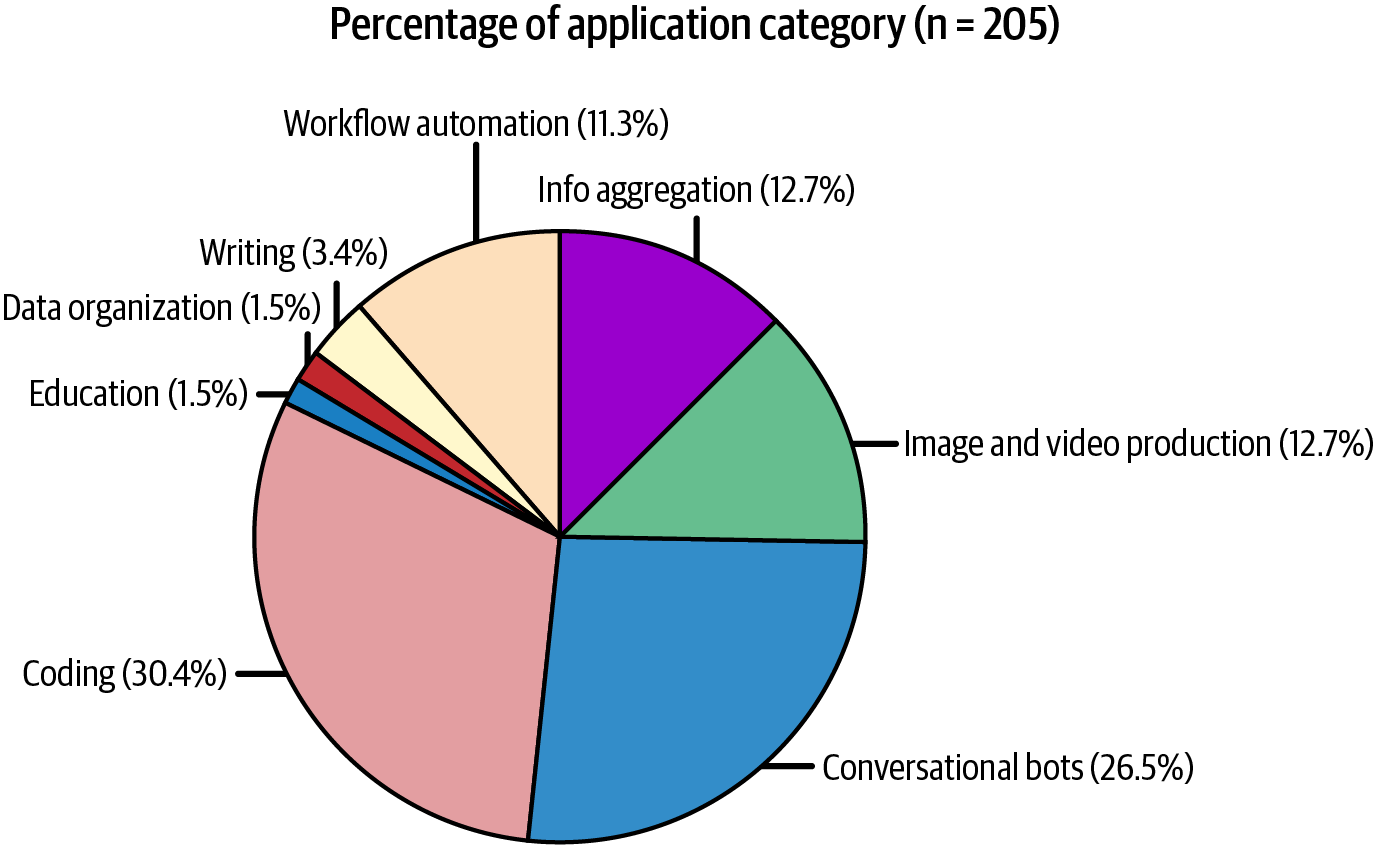
Figure 1-7. Distribution of use cases in the 205 open source repositories on GitHub.
Enterprises Prefer Lower-Risk Applications
The enterprise world generally prefers applications with lower risks. A 2024 a16z Growth report showed that companies are faster to deploy internal-facing applications (internal knowledge management) than external-facing applications (customer support chatbots).
Internal-Facing
External-Facing
Similarly, while foundation models are open-ended and can be used for any task, many applications built on top of them are still close-ended, such as classification. Classification tasks are easier to evaluate, which makes their risks easier to estimate.
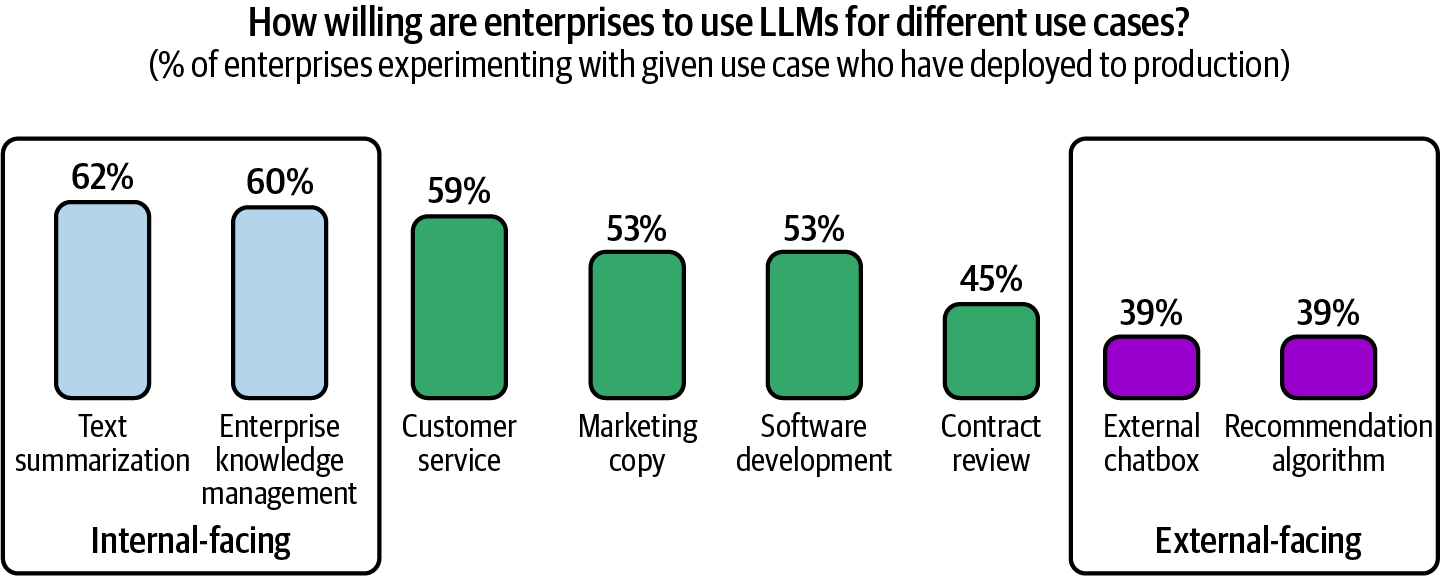
Figure 1-8. Companies are more willing to deploy internal-facing applications
Coding
In multiple generative AI surveys, coding is hands down the most popular use case. AI coding tools are popular both because AI is good at coding and because early AI engineers are coders who are more exposed to coding challenges.
One of the earliest successes of foundation models in production is GitHub Copilot, whose annual recurring revenue crossed $100 million only two years after its launch. AI-powered coding startups have raised hundreds of millions of dollars — Magic raised $320 million and Anysphere raised $60 million, both in August 2024. Open source tools like gpt-engineer and screenshot-to-code both reached 50,000 GitHub stars within a year.
Specialized Coding Tasks
Beyond general code completion, many tools specialize:
- Extracting structured data from web pages and PDFs (AgentGPT)
- Converting English to code (DB-GPT, SQL Chat, PandasAI)
- Generating a website from a design or screenshot (screenshot-to-code, draw-a-ui)
- Translating between programming languages or frameworks (GPT-Migrate, AI Code Translator)
- Writing documentation (Autodoc)
- Creating tests (PentestGPT)
- Generating commit messages (AI Commits)
Will AI Replace Software Engineers?
The "Yes" Camp
The "No" Camp
McKinsey researchers found that AI can help developers be twice as productive for documentation and 25–50% more productive for code generation and refactoring. Minimal productivity improvement was observed for highly complex tasks. In conversations with developers of AI coding tools, many told me that AI is much better at frontend than backend development.
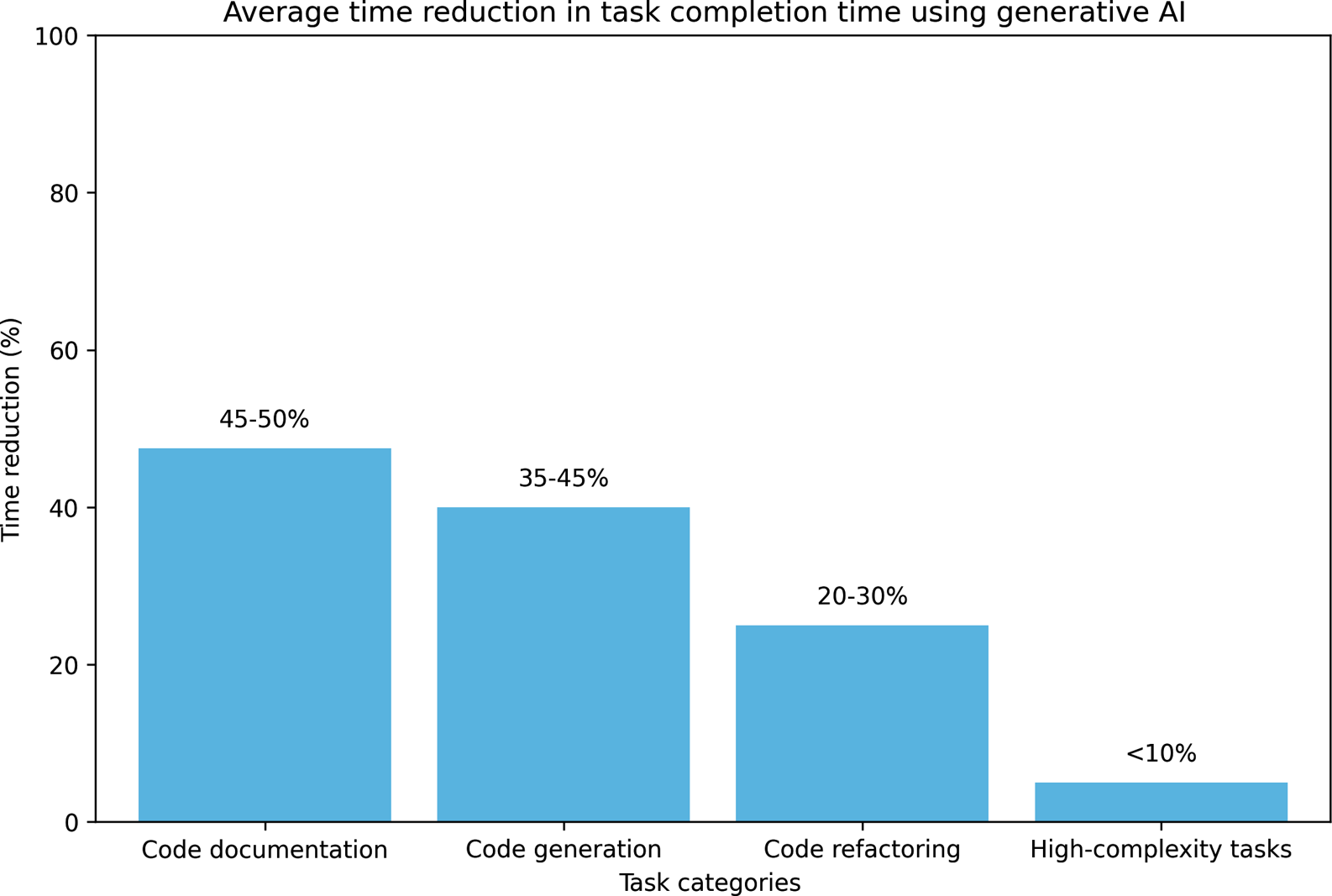
Figure 1-9. AI can help developers be significantly more productive, especially for simple tasks, but this applies less for highly complex tasks. Data by McKinsey.
Image and Video Production
Thanks to its probabilistic nature, AI is great for creative tasks. Some of the most successful AI startups are creative applications.
Midjourney
Adobe Firefly
Runway, Pika, Sora
As of December 2023, among the top 10 free apps for Graphics & Design on the Apple App Store, half had "AI" in their names. Soon, graphics and design apps will incorporate AI by default and the word "AI" will disappear from product names. Chapter 2 discusses the probabilistic nature of AI in more detail.
AI-Generated Profile Pictures
It's now common to use AI to generate profile pictures for social media, from LinkedIn to TikTok. Many candidates believe AI-generated headshots can increase their chances of landing a job.
Ads and Marketing
For enterprises, ads and marketing have been quick to incorporate AI.3 AI can generate promotional images and videos directly, brainstorm ideas, or produce first drafts for human experts to iterate on. You can use AI to generate multiple ads and test which one works best — or generate variations by season (changing leaf colors during fall) or location (adding snow during winter).
Writing
AI has long been used to aid writing. If you use a smartphone, you're probably familiar with autocorrect and auto-completion, both powered by AI. Writing is an ideal application: we do it a lot, it can be tedious, and we have a high tolerance for mistakes — if a model suggests something you don't like, you can just ignore it.
Consumer Use Cases
The use cases are obvious. Many use AI to communicate better — you can be angry in an email and ask AI to make it pleasant, or hand over bullet points and get back complete paragraphs. Several people claimed they no longer send an important email without asking AI to improve it first.
Students are using AI to write essays. Writers are using AI to write books.4 Many startups already use AI to generate children's, fan fiction, romance, and fantasy books. Unlike traditional books, AI-generated books can be interactive — a plot can change depending on the reader's preference. A children's reading app identifies the words a child has trouble with and generates stories centered around them.
Note-taking and email apps like Google Docs, Notion, and Gmail all use AI to help users improve their writing. Grammarly finetunes a model to make users' writing more fluent, coherent, and clear.
Enterprise Use Cases
For enterprises, AI writing is common in sales, marketing, and general team communication. Many managers told me they use AI to help write performance reports. AI helps craft cold outreach emails, ad copywriting, and product descriptions. CRM apps like HubSpot and Salesforce also have tools for enterprise users to generate web content and outreach emails.
AI seems particularly good with SEO — perhaps because many models are trained with data from the internet, which is populated with SEO-optimized text.
Education
Whenever ChatGPT is down, OpenAI's Discord server is flooded with students complaining about being unable to complete their homework. Several education boards, including the New York City Public Schools and the Los Angeles Unified School District, were quick to ban ChatGPT for fear of cheating, but reversed their decisions just months later.
Personalized Learning
- Auditory learners can ask AI to read materials out loud
- Students who love animals can ask AI to feature more animals in visualizations
- Those who find code easier than math can ask AI to translate equations into code
AI is especially helpful for language learning — you can ask AI to roleplay practice scenarios. Pajak and Bicknell (Duolingo, 2022) found that out of four stages of course creation, lesson personalization is the stage that benefits most from AI.
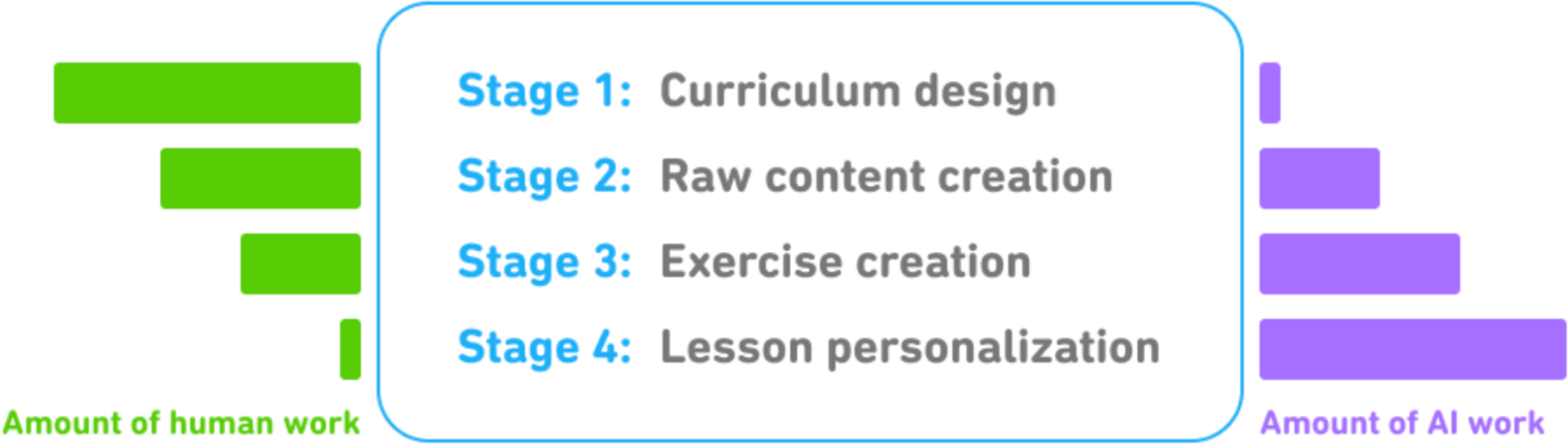
Figure 1-10. AI can be used throughout all four stages of course creation at Duolingo, but it's the most helpful in the personalization stage. Image from Pajak and Bicknell (Duolingo, 2022).
Quizzes, Debate, and Teaching Assistants
AI can generate quizzes — both multiple-choice and open-ended — and evaluate the answers. AI can become a debate partner as it's much better at presenting different views on the same topic than the average human. Khan Academy offers AI-powered teaching assistants to students and course assistants to teachers. One innovative method: teachers assign AI-generated essays for students to find and correct mistakes.
Conversational Bots
Conversational bots are versatile. They help us find information, explain concepts, and brainstorm ideas. AI can be your companion and therapist. It can emulate personalities, letting you talk to a digital copy of anyone you like.
Companions
Digital girlfriends and boyfriends have become weirdly popular in an incredibly short amount of time. Many are already spending more time talking to bots than to humans (see discussions here and here). Some are worried that AI will ruin dating.
In research, people have used groups of conversational bots to simulate a society, enabling studies on social dynamics (Park et al., 2023).
Enterprise Bots
For enterprises, the most popular bots are customer support bots. They help companies save costs while improving customer experience by responding sooner than human agents. AI can also be product copilots that guide customers through painful and confusing tasks — filing insurance claims, doing taxes, looking up corporate policies.
Beyond Text
The success of ChatGPT prompted a wave of text-based conversational bots, but text isn't the only interface.
Voice Assistants
3D Conversational Bots
NPCs are essential for advancing the storyline of many games. Without AI, they're typically scripted to do simple actions with a limited range of dialogues. AI can make these NPCs much smarter, changing the dynamics of existing games like The Sims and Skyrim — and enabling new games never possible before.
Information Aggregation
Many people believe success depends on the ability to filter and digest useful information. But keeping up with emails, Slack messages, and news can be overwhelming.
Talk-to-Your-Docs
For consumers, many applications process your documents — contracts, disclosures, papers — and let you retrieve information conversationally. This use case is also called talk-to-your-docs. AI can summarize websites, research, and create reports on topics of your choice.
Enterprise Aggregation
Information aggregation and distillation are essential for enterprise operations. More efficient information flow can help an organization become leaner, reducing the burden on middle management.
AI can help you surface critical information about potential customers and run analyses on competitors. The more information you gather, the more important it is to organize it — information aggregation goes hand in hand with data organization.
Data Organization
One thing certain about the future is that we'll continue producing more and more data. Smartphone users will keep taking photos and videos. Companies will keep logging everything about their products, employees, and customers. Billions of contracts are created each year. Photos, videos, logs, and PDFs are all unstructured or semi-structured data — and it's essential to organize it in a way that can be searched later.
Visual Search
AI can automatically generate text descriptions about images and videos, or match text queries with visuals. Google Photos uses AI to surface images matching search queries.8 Google Image Search goes a step further: if there's no existing image matching users' needs, it can generate one.
Data Analysis
AI is very good with data analysis. It can write programs to generate data visualizations, identify outliers, and make predictions like revenue forecasts.9
Intelligent Document Processing
Enterprises can use AI to extract structured information from unstructured data, which can be used to organize and search.
Simple Extraction
Complex Extraction
Workflow Automation
Ultimately, AI should automate as much as possible.
For End Users
For Enterprises
One especially exciting use case is using AI models to synthesize data, which can then be used to improve the models themselves. You can use AI to create labels for your data, looping in humans to improve the labels. We discuss data synthesis in Chapter 8.
Agents
Access to external tools is required to accomplish many tasks. To book a restaurant, an application might need permission to open a search engine to look up the restaurant's number, use your phone to make calls, and add appointments to your calendar.
Footnotes
- Fun fact: as of September 16, 2024, the website theresanaiforthat.com lists 16,814 AIs for 14,688 tasks and 4,803 jobs. ↩
- Exploring different AI applications is perhaxps one of my favorite things about writing this book. It's a lot of fun seeing what people are building. You can find the list of open source AI applications (https://goodailist.com/repos) that I track. The list is updated every 12 hours. ↩
- Because enterprises usually spend a lot of money on ads and marketing, automation there can lead to huge savings. On average, 11% of a company's budget is spent on marketing. See "Marketing Budgets Vary by Industry" (Christine Moorman, WSJ, 2017). ↩
- I have found AI very helpful in the process of writing this book, and I can see that AI will be able to automate many parts of the writing process. When writing fiction, I often ask AI to brainstorm ideas on what it thinks will happen next or how a character might react to a situation. I'm still evaluating what kind of writing can be automated and what kind can't be. ↩
- My hypothesis is that we'll become so distrustful of content on the internet that we'll only read content generated by people or brands we trust. ↩
- It surprises me how long it takes Apple and Amazon to incorporate generative AI advances into Siri and Alexa. A friend thinks it's because these companies might have higher bars for quality and compliance, and it takes longer to develop voice interfaces than chat interfaces. ↩
- Disclaimer: I'm an advisor of Convai. ↩
- I currently have over 40,000 photos and videos in my Google Photos. Without AI, it'd be near impossible for me to search for the photos I want, when I want them. ↩
- Personally, I also find AI good at explaining data and graphs. When encountering a confusing graph with too much information, I ask ChatGPT to break it down for me. ↩
The Rise of AI Engineering
Trace how decades of advances in language models, self-supervision, and multimodality produced foundation models — and turned AI engineering into a discipline of its own.
Planning AI Applications
How to evaluate use cases, build vs buy, set success metrics, plan milestones, and maintain AI products in a fast-moving landscape.